Early Bird Specials:
- Scroll down below for promotional details for each departure date
Day 1 Hobart
Arrive in Hobart, where you will be met by a representative and transferred with your fellow expeditioners to your assigned pre-voyage hotel. If you are already in Hobart, we ask you to make your way to your hotel. This afternoon, visit the hospitality desk in the lobby to collect your luggage tags. Please clearly label the tags with your name and ship cabin number. Our team will confirm details regarding your embarkation day, answer any questions and provide you with information on where to dine or purchase last minute items.
Day 2 Embarkation
This morning, enjoy breakfast and check-out. Please ensure your cabin luggage is fitted with cabin tags clearly labelled with your name and cabin number. By 11.00 am, take your cabin luggage to hotel reception, prior to, or at check-out. Your luggage will be stored and transferred directly to the port for clearance, to be placed in your cabin ahead of your arrival on board. Please keep any valuables or personal items with you throughout the day.
Day 3-5 At Sea
Day 6-7 Macquarie Island
“Penguins were in thousands on the uprising cliffs, and from rookeries near and far came an incessant din . . . seabirds of many varieties gave warning of our near approach to their nests” Douglas Mawson, 1911.
As they sailed towards Antarctica, Mawson and his men encountered ‘an exquisite scene’. Macquarie Island (known affectionately as Macca) rises steeply from the Southern Ocean in a series of emerald summits: a beautifully fierce, elemental landscape teeming with life.
Keep your binoculars handy because this subantarctic refuge is home to 3.5 million breeding seabirds, including no less than four species of penguin! Alongside boisterous colonies of tuxedoed kings, charming gentoos, robust rockhoppers and endemic royal penguins, you’ll find three types of fur seals and a large proportion of the world’s elephant seals. Layer up and head out on deck to experience the sound, sight (and smell!) as you approach one of the largest concentrations of life in the Southern Ocean.
Day 8-10 At Sea
Days 11-17 Victoria Land Coast and the Ross Sea
It’s almost impossible to describe the feeling of arriving in this storied, ice-bound sector of Antarctica. Stepping outside and taking a deep breath of some of the most fresh, crisp air on earth is an experience to cherish forever.
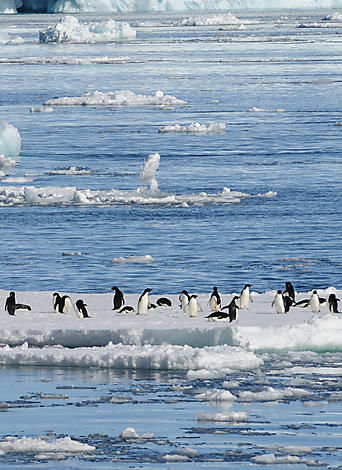
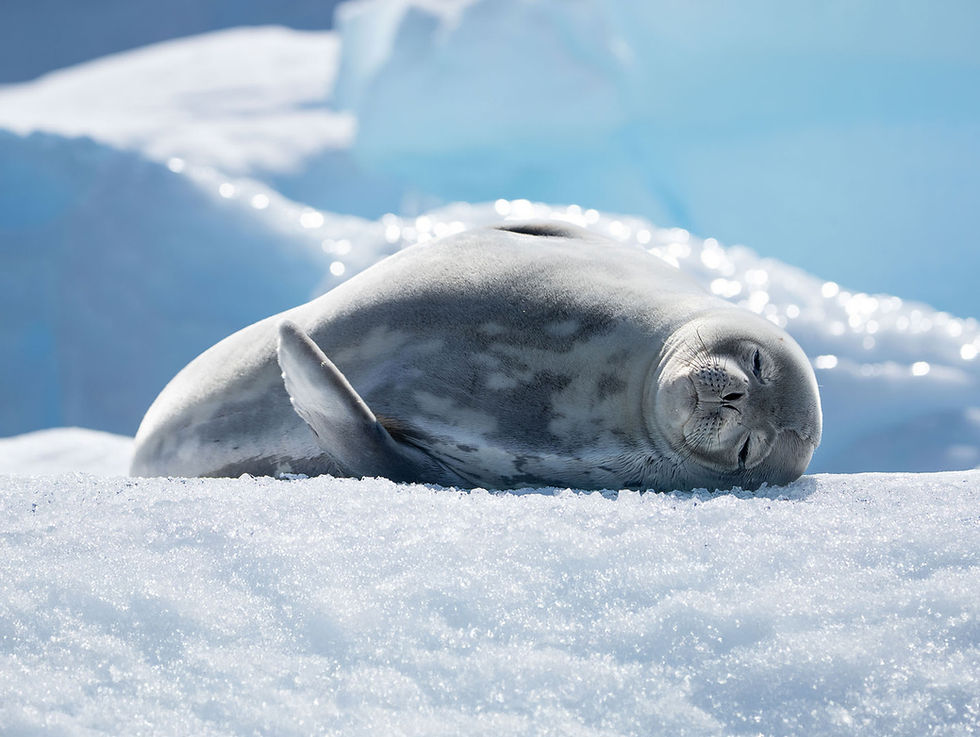
The Ross Sea region is a globally significant wildlife sanctuary. Its nutrient-rich waters support an astonishing array of uniquely adapted Antarctic species, including Ross Sea orcas, Antarctic petrels and South Pacific Weddell seals. It is also home to Antarctica’s largest Adélie penguin colony, and many of the largest emperor penguin colonies. The unique biodiversity of the Ross Sea has been protected within the world’s largest marine protected area since 2016.
The human heritage of the Ross Sea coast is equally impressive. Since James Clark Ross discovered the region in 1841, countless expeditions have built base camps on scattered ice-free slivers of land, using them as staging posts for bold forays across the polar plateau. Many of them departed in a hurry, leaving artefacts, scientific equipment and sometimes entire huts behind. Today these sites are preserved as open-air museums and protected under the Antarctic Treaty System.
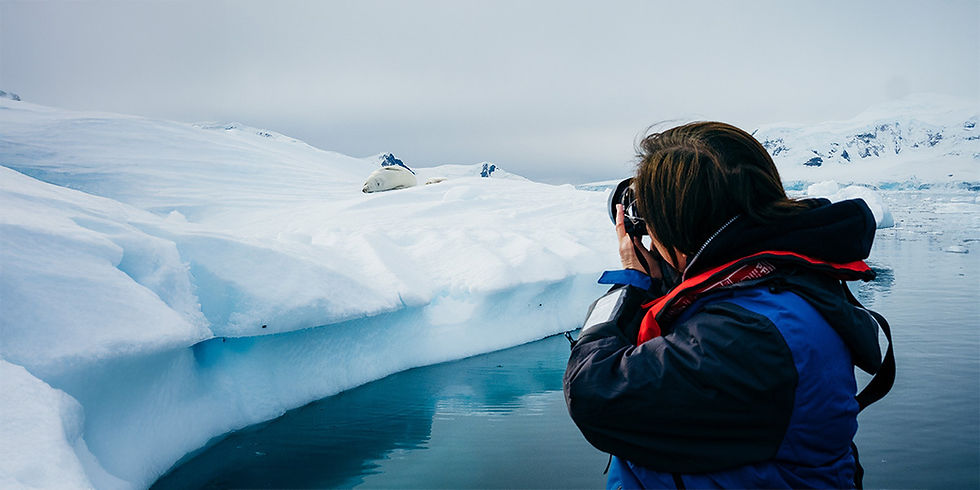
Embrace the spirit of exploration as your expedition team designs your voyage from day to day, bringing decades of experience to selecting the ideal sites based on the prevailing weather, ice conditions and wildlife opportunities.
Day 18-21 At Sea
Days 22-24 New Zealand's Subantarctica Islands
First visited by Māori navigators centuries ago, these islands are of great significance to Ngāi Tahu, the indigenous peoples of New Zealand’s South Island. Their natural beauty and astonishing biodiversity have now been recognised globally, but few have had the privilege to visit these far-flung shores, which are now yours to explore.
Auckland Islands (Maungahuka / Motu Maha)
Born of fire, scoured by ancient glaciers and shaped by the fierce hand of the Southern Ocean, there is an exquisite ruggedness to this group of weather-worn islands. This apparent bleakness belies the extraordinary abundance of life that thrives here. Roughly half of the world’s yellow-eyed penguins (hoiho), most of the world’s white-capped mollymawks, and the entire population of Auckland Islands wandering albatross find shelter on these shores.
Some places we may visit include:
Sandy Bay
Sandy Bay is home to a breeding colony of rare New Zealand (Hooker’s) sea lions and an enchanting rātā forest where yellow-eyed penguins (hoiho) make their nests.
Carnley Harbour, Erlangen Clearing
Carnley Harbour offers superb Zodiac cruising through a landscape rich in human history. In 1864, five men became stranded here after their schooner, the Grafton, was wrecked, putting a sudden end to their sealing and tin prospecting ambitions. We hope to see the skeletal remnants of the Grafton, and the moss-covered remains of the Epigwaitt Hut, where they sheltered for 20 months.
Victoria Passage
Victoria Passage is a lively channel separating Auckland Island from the mountainous Adams Island to the south. We may Zodiac cruise these scenic waters, watching for sooty shearwaters, penguins and sea-lions frolicking in the pure waters.
Campbell Island (Motu Ihupuku)
Wind and weather permitting, we will Zodiac cruise sheltered harbours and coves in search of Campbell Island snipes and teals, yellow-eyed penguins (hoiho), and New Zealand (Hooker’s) sea lions (whakahao).
We hope to land at Beeman Cove, Perseverance Harbour, where an old meteorological station stands vigil on the windswept shoreline. Follow a boardwalk through tussock and upland tundra, then enter an otherworldly landscape where large-leaved megaherbs abound. Wonder at the Ross Lily, Campbell Island Daisy and Campbell Island carrot, whose brilliant flowers would look more at home in the tropics than these southern climes. Continue towards the nesting grounds of majestic southern royal albatross, whose wingspans can exceed three metres (10 feet). It is truly humbling to be in the presence of these great wanderers of the southern seas. Find a spot to quietly observe these marvellous birds as they go about their daily duties, undisturbed by their human visitors.
Days 25 At Sea
Day 26 Disembark Dunedin
After breakfast, farewell your expedition team and fellow passengers as we all continue our onward journeys, hopefully with a newfound sense of the immense power of nature.
Note: At the conclusion of the voyage, we do not recommend booking flights departing prior to 12.00 pm on the day of disembarkation in case there are delays.